
This post is adjusted from an episode of our podcast “ Civic” It is the very first in a two-part series about the Center for Medicare and Medicaid Providers’ choice to pull financing for client care at Laguna Honda Medical Facility.
Almost 700 live-in clients at Laguna Honda Healthcare facility were tossed into mayhem this spring after a series of damning assessments led the Center for Medicare and Medicaid Providers to pull financing and mandate a closure strategy for the center.
It’s an alarming circumstance for locals of the competent nursing center who have actually specialized requirements that make them tough to position in other places. Healthcare facility administrators are rushing to achieve the recertification required to continue to get federal financing.
2 previous Laguna Honda doctors state they have actually continued to caution city authorities about this looming crisis after very first flagging it 18 years earlier. That’s when a Department of Public Health policy started confessing to Laguna Honda clients whose requirements fell outside the scope of a normal retirement home for the senior.
” This shutdown was foreseeable,” previous Laguna Honda doctor Dr. Teresa Palmer stated at a San Francisco Board of Supervisors hearing on June 14. “Usually, an assisted living home is filled with mostly ladies over 85. And now you have an assisted living home, with primarily guys from 40 to 60. The city requires to supply financing and a location for individuals with compound usage issues and perform conditions.”
The course to decertification started in July 2021 when 2 clients nonfatally overdosed on fentanyl and methamphetamine. That prompted an evaluation by the California Public Health Department. In files acquired by the Public Press, the Center for Medicare and Medicaid Providers reported that the examination exposed 13 of 37 tested clients checked favorable for illegal drugs, and 23 of those clients had actually contraband products, consisting of drugs, syringes and other drug stuff.
Healthcare facility authorities were provided up until April 14 to fix all its offenses while regulators continued to perform regular assessments. Follow-up studies exposed other major breaches. Amongst them was an event in which a client smoked fentanyl throughout a psychiatric visit. And medical facility staffers confessed that they were not able to manage illegal substance abuse amongst clients. Regulators stated a state of instant jeopardy in March. In April, the medical facility solved issues with drugs and contraband, however inspectors found other issues around health. That led the federal center to decertify the medical facility and reveal that it would pull its financing for client care. Regulators consequently offered the medical facility a four-month cushion with moneying to Sept. 13.
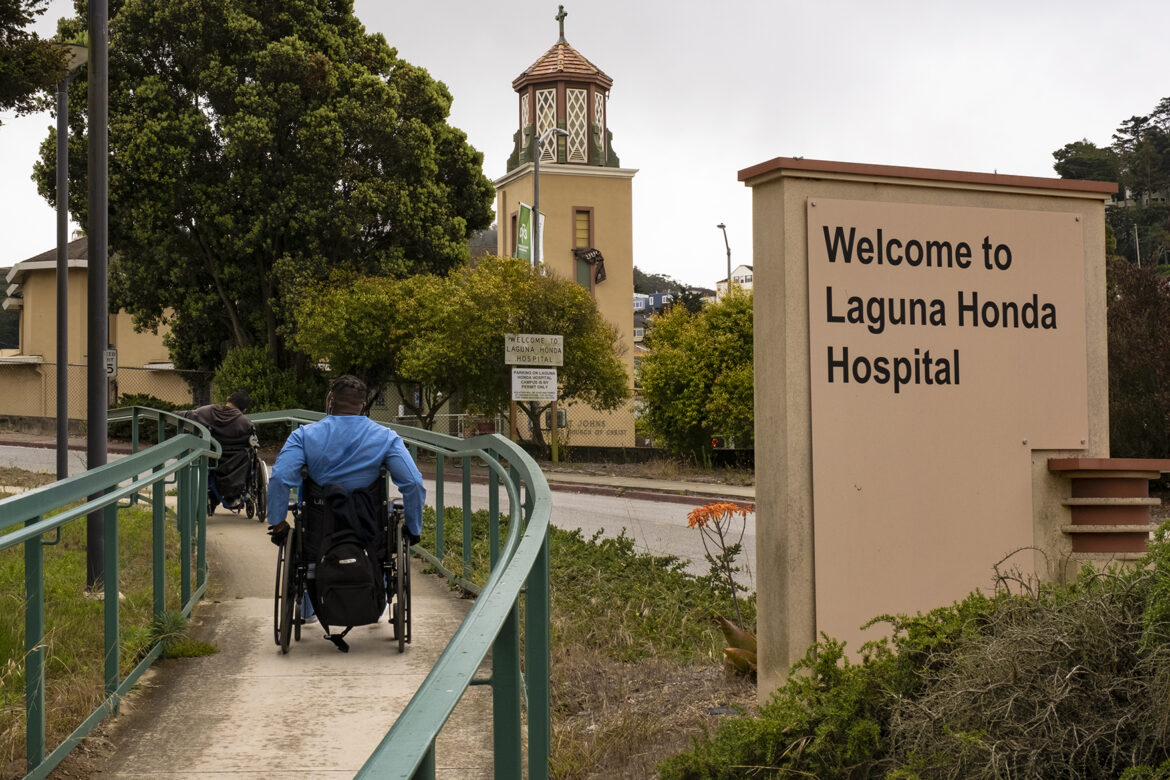
Yesica Prado/ San Francisco Public Press
After a smoke break, 2 clients roll their wheelchairs up a ramp towards the entryway of Laguna Honda Medical Facility in San Francisco’s Twin Peaks community.
The San Francisco Department of Public Health owns and supervises Laguna Honda, and the city contributed $33 million to its $296 million spending plan in 2015. However according to its last yearly report, about 99% of the medical facility’s repayments for client care originated from Medicare and Medicaid– aka MediCal, which is covered by a mix of state and federal funds.
The city can not cover the $15 million a month in federal cash utilized to run the center, however it is investing $5.6 million on 2 experts with knowledge in Center for Medicare and Medicaid Providers treatments to fix the concerns prior to getting recertification and a dedication to continue moneying past their September due date.
Palmer, who was a geriatric doctor at Laguna Honda from 1989 to 2004, stated the present crisis might have been prevented if the city had actually followed cautions released 18 years earlier when the Department of Public Health started stepping in to alter the medical facility’s admissions policy.
In 2004, alters to the admissions policy were made in reaction to a city health department audit that discovered that some non-acute San Francisco General Healthcare facility clients remained in acute-care beds. Since they didn’t require intense care, Medicare didn’t cover their $1,300-per-day payments. The expense was being supported by the city at a rate of millions of dollars annually. The Department of Public Health remedied this mismanagement by moving clients who didn’t need intense care toLaguna Honda Amongst those clients were individuals with long term psychiatric requirements, behavioral conditions, and drug abuse issues.
It was a practice called the “circulation job,” according to Dr. Derek Kerr, who operated at the medical facility for ten years up until he was fired in 2010 for blowing the whistle on an unassociated monetary mismanagement case. He won a subsequent suit for his inappropriate termination and ended up being an investigative press reporter for the Westside Observer, a San Francisco news outlet. He takes an unique interest inLaguna Honda And complete disclosure, he has actually likewise contributed to the general public Press.
Kerr stated that prior to the 2004 circulation job, Laguna Honda had an admissions committee that would evaluate out clients “who are violent, who set fires, who were utilizing drugs.” When the Department of Public Health took control of those obligations, clients were confessed “regardless of behavioral concerns,” he stated. Personnel was not geared up to take care of clients with major, long term psychiatric requirements.
” So, that resulted in a rise in violence and substance abuse and intimidation,” Kerr stated.
Taking place grievances drew the attention of the state Occupational Security and Health Administration and other regulative firms, he stated, in addition to demonstrations by the medical personnel, and a suit was submitted versus the Department of Public Health. Then, in 2006, locals and previous doctors proposed a tally procedure that would have restricted confessing individuals with psychiatric or behavioral medical diagnoses, individuals who positioned a hazard to themselves or others, and individuals who required short-term care. Challengers stated the legislation was extremely broad, and would have had unintentional effects, consisting of releasing possibly hundreds of clients who terribly required treatment. Citizens did not support the tally procedure. Nonetheless, brand-new security and precaution were embraced, and the circulation job was formally reversed, however, Kerr stated, client admission practices didn’t alter.
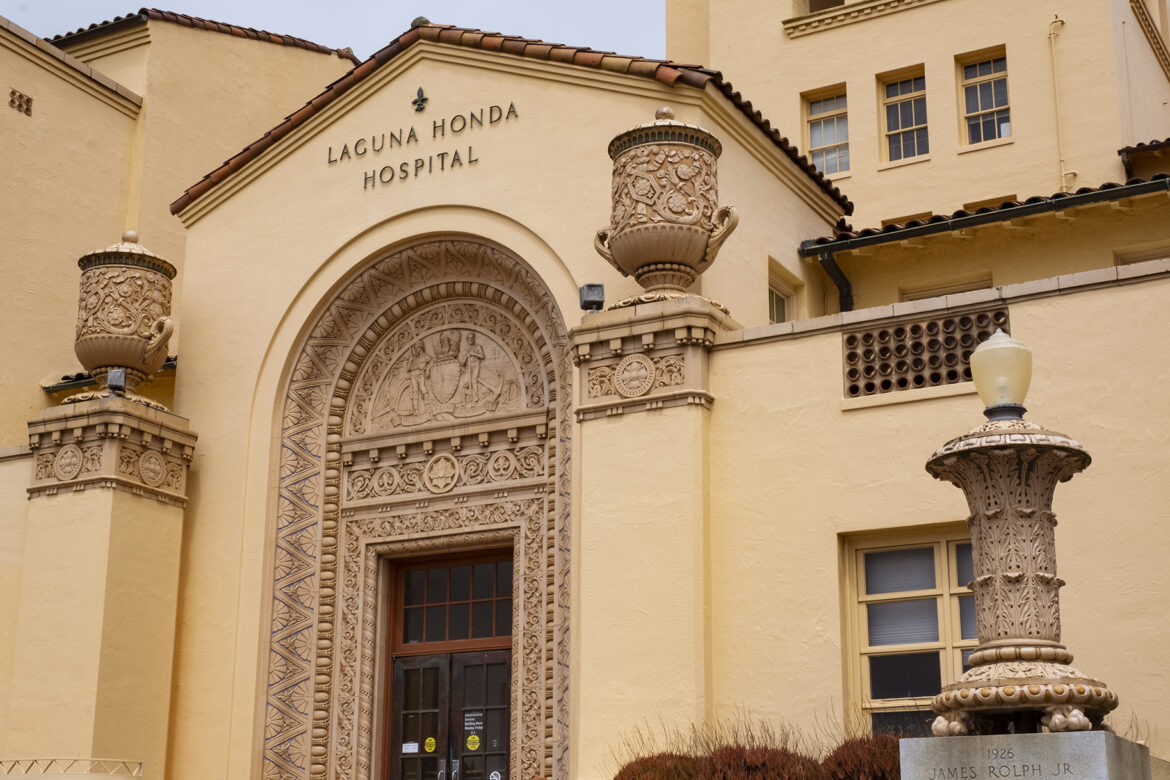
Yesica Prado/ San Francisco Public Press
Laguna Honda opened in 1866 offering take care of individuals who were indigent or chronically ill. Following the fantastic earthquake and fire in 1906, it took care of thousands of displaced San Franciscans residing in refugee camps spread throughout the city. The shift from relief house to competent nursing center started in the 1920’s, according to a history of Laguna Honda on its site.
The Department of Public Health decreased an interview demand however emailed an anonymous declaration that “the medical facility takes all findings from or [sic] regulators extremely seriously and we are making instant enhancements to deal with issues.”
Throughout the June 14 Board of Supervisors conference, freshly designated Laguna Honda CEO Roland Pickens stated authorities prepare to deal with issues connected to altering client population by separating clients into 2 towers according to their healthcare requirements. He stated this would “lessen regulative noncompliance as it associates with compound usage and behavioral conditions.”
Throughout the hearing, Manager Myrna Melgar, who represents Laguna Honda’s district, pressed count on the idea that a particular sector of the population must not be confessed to the medical facility.
” The remedy is not to serve a various population,” she stated. “It is to come up with systems that handle a population that we have today. That is who we are, that is our worths of San Francisco, that’s who we require to be. And we require to do more of it in fact, not less.”
San Francisco is pursuing including hundreds of psychological health and dependency treatment beds throughout the city. In the 2022-2023 spending plan, Mayor London Type designated $57.5 million to run freshly obtained behavioral health centers amounting to 360 beds.
Next, we’ll analyze the medical facility’s efforts to satisfy a Center for Medicare and Medicaid Providers instruction of moving all clients out of the center prior to getting recertification in the fall.