

Marla Ollinger resides on a 300-acre cattle ranch near Browning, Montana. Her boy, Justin Lee Littledog, relocated with her in 2020. He passed away of a fentanyl overdose in March.
Tony Bynum for KHN.
conceal caption
toggle caption
Tony Bynum for KHN.
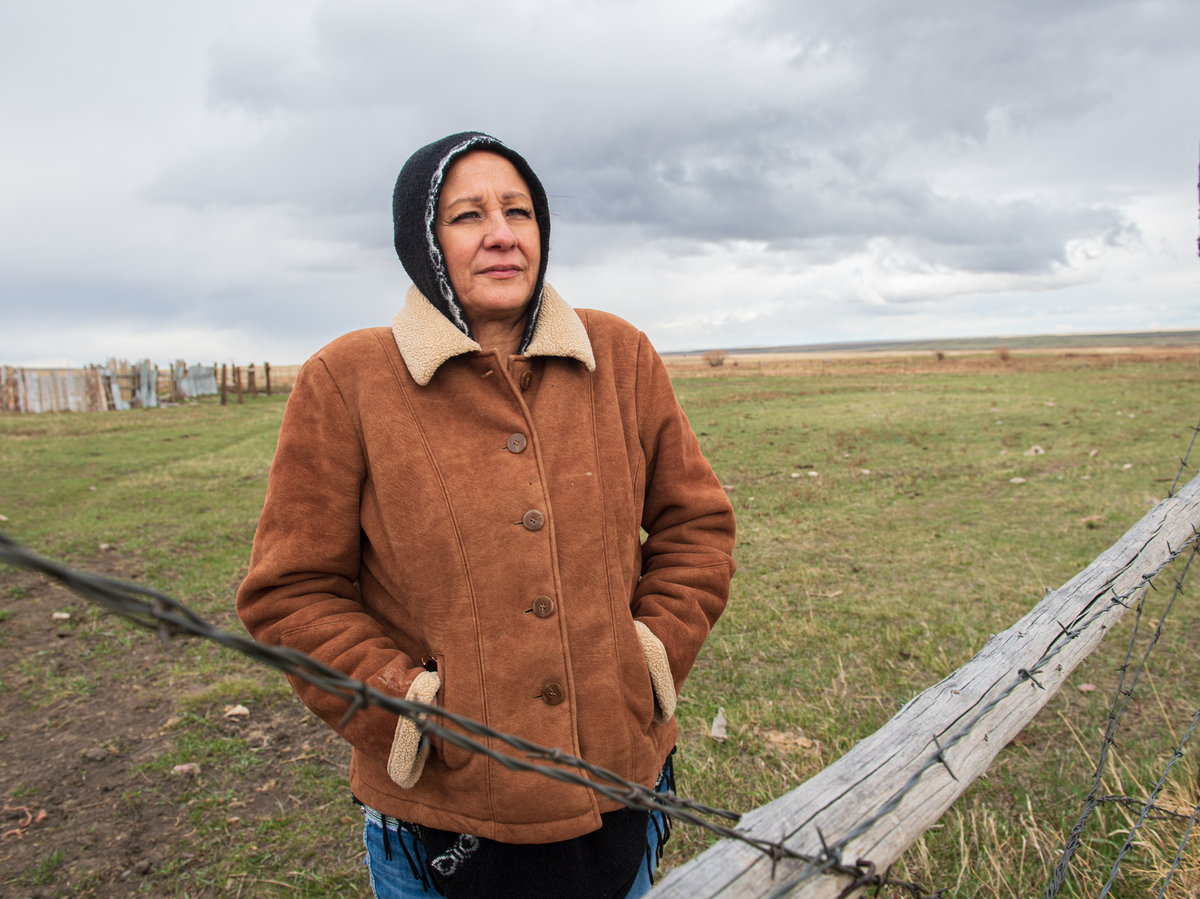
Marla Ollinger resides on a 300-acre cattle ranch near Browning, Montana. Her boy, Justin Lee Littledog, relocated with her in 2020. He passed away of a fentanyl overdose in March.
Tony Bynum for KHN.
BROWNING, Mont.– In summertime 2020, as the pandemic was embeding in, Justin Lee Littledog called his mommy to inform her he was moving from Texas back house to the Blackfeet Indian Appointment in Montana. And he was taking his sweetheart, stepson and boy.
They relocated with his mommy, Marla Ollinger, who resided on a 300-acre cattle ranch on the rolling grassy field outside Browning– and had what Ollinger states was the very best summertime of her life. “That was the very first time I have actually gotten to satisfy Arlin, my very first grand son,” Ollinger states. Another grand son was born in the spring of 2021– and Littledog, 33, discovered upkeep work at the gambling establishment in Browning to support his growing household.

However things started to unwind over the next year and a half. Pals and loved ones saw Littledog’s 6-year-old stepson walking town alone. Then last fall, Ollinger gotten a call from another among her adult children. He was scared since he was quickly not able to wake Littledog’s sweetheart. Ollinger states she might hear among Littledog’s kids weeping in the background.
After that occurrence, Ollinger asked Littledog whether he and his sweetheart were utilizing drugs. She states Littledog rejected it. He described to his mommy that individuals on the booking were utilizing a drug she had actually never ever become aware of: fentanyl, a artificial opioid that depends on 100 times as powerful as morphine. He stated he would never ever utilize something so hazardous and assured his mommy whatever was great. Ollinger withdrawed, fearing that anymore fight would press her boy away.

Then in March, Ollinger awakened to screams. She left her grandchildren, who were oversleeping her bed, and entered into the next space. “My boy was resting on the flooring,” she states. Littledog wasn’t breathing.
After calling 911, she drove behind the ambulance into Browning. He was noticable dead soon after the ambulance showed up at the regional healthcare facility.
Littledog was among 4 individuals who passed away from a fentanyl overdose on the booking on the 2nd week of March, according to Blackfeet health authorities. An extra 13 individuals on the booking made it through overdoses that week, making a shocking overall for a Native population of about 10,000 individuals.
Falling victim to fentanyl

A cemetery in Browning. Littledog was amongst 4 individuals to pass away from fentanyl overdoses on the Blackfeet Indian Appointment in one week in March, according to Blackfeet authorities.
Tony Bynum for KHN.
conceal caption
toggle caption
Tony Bynum for KHN.
Throughout the pandemic, fentanyl settled in Montana and neighborhoods throughout the Mountain West area, states Keith Humphreys of the Stanford-Lancet Commission on the North American Opioid Crisis. Formerly, the drug prevailed east of the Mississippi River.
Montana police authorities have actually obstructed record varieties of pale blue tablets made to appear like prescription opioids such as OxyContin. In the very first 3 months of 2022, the Montana Highway Patrol took over 12,000 fentanyl tablets, more than 3 times the number from 2021.
Nationwide, at least 103,000 individuals have actually passed away from drug overdoses in 2021, a 45% boost from 2019, according to information from the Centers for Illness Control and Avoidance. About 7 of every 10 of those deaths were from artificial opioids, mainly fentanyl.
Overdose deaths disproportionately impact Native Americans. The overdose death rate amongst Native individuals was the greatest of all racial groups in the very first year of the pandemic– and had to do with 30% greater than the rate amongst white individuals, according to a March research study released in JAMA Psychiatry, co-authored by Joe Friedman, a scientist at the University of California, Los Angeles.
In Montana, the opioid overdose death rate for Native individuals was two times that of white individuals from 2019 to 2021, according to the state’s Department of Public Health and Person Providers.
Part of the reason that this is taking place is that Native Americans have fairly less access to healthcare resources, Friedman states. “With the drug supply ending up being so hazardous and harmful, it needs resources and understanding and abilities and funds [for people] to remain safe,” he states. “It needs access to hurt decrease, healthcare, medications.”
The Indian Health Service, which is accountable for supplying healthcare to lots of Native individuals, has actually been chronically underfunded. According to a 2018 report from the U.S. Commission on Civil Liberty, IHS per client expenses are considerably less than those of other federal health programs.
” What we’re seeing now is ingrained variations and social factors of health type of substantiating,” Friedman states, describing the out of proportion overdose deaths amongst Native Americans.
Blackfeet Tribal Company Council member Stacey Keller states she has actually experienced the absence of resources firsthand while attempting to get a member of the family into treatment. She states simply discovering a center for detoxing was tough, not to mention discovering one for treatment.
” Our treatment center here, they’re not geared up to handle opioid dependency, so [people] are typically referred” to centers beyond the booking, she states. “A few of the battles we have actually seen throughout the state and even the western part of the United States is that a great deal of the treatment centers are at capability.”

Fentanyl settled in Montana and in neighborhoods throughout the Mountain West area throughout the pandemic, and general drug overdose deaths are disproportionately impacting Native Americans.
Tony Bynum for KHN.
conceal caption
toggle caption
Tony Bynum for KHN.
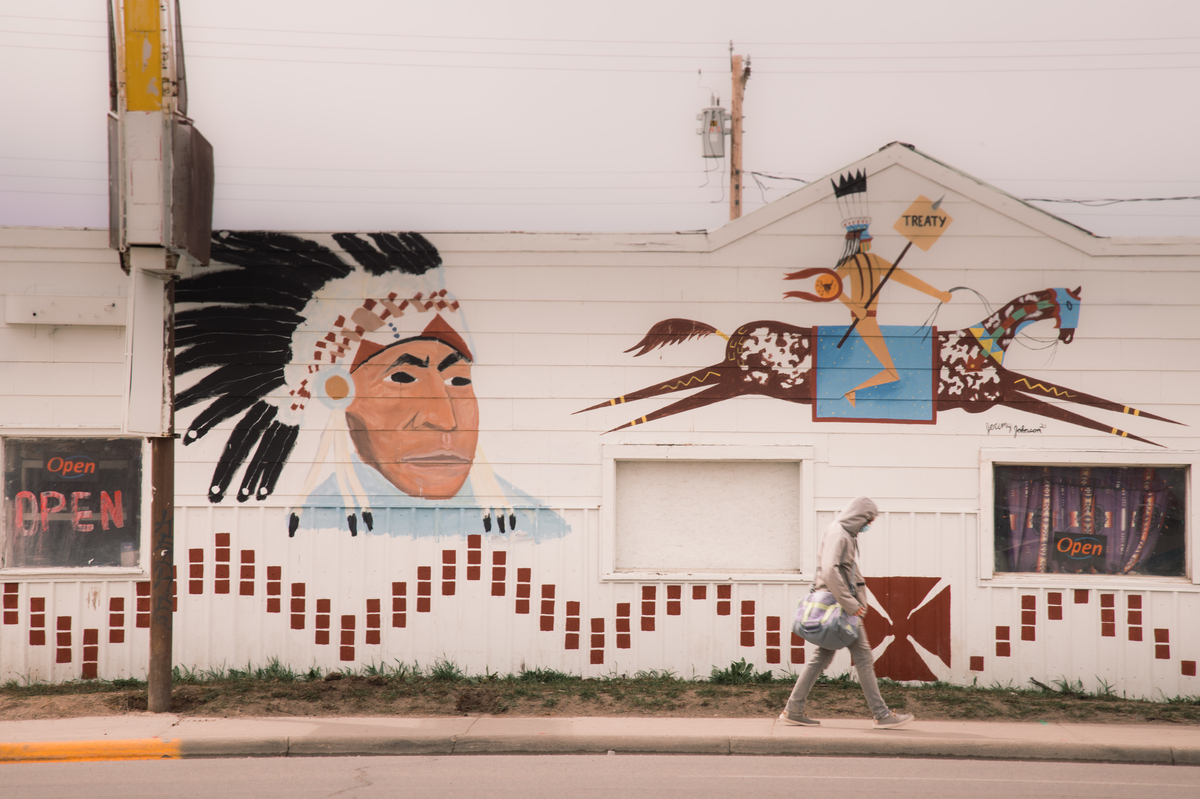
Fentanyl settled in Montana and in neighborhoods throughout the Mountain West area throughout the pandemic, and general drug overdose deaths are disproportionately impacting Native Americans.
Tony Bynum for KHN.
The regional treatment center does not have the medical competence to monitor somebody going through opioid withdrawal. Just 2 detox beds are readily available at the regional IHS healthcare facility, Keller states, and they are typically inhabited. The healthcare system on the booking likewise does not provide substance abuse to deal with opioid dependencies. The nearby places to get buprenorphine or methadone, for example, are 30 to 100 miles away. That can be a concern to clients who are needed by federal guidelines to take those medications to handle their treatment on a everyday or weekly basis.
Finding treatment for Native neighborhoods
Keller states tribal leaders have actually asked for help from IHS to develop treatment centers and acquire other compound usage resources, like detox beds and medication, in the neighborhood– without any outcomes.
IHS Alcohol and Drug abuse Program expert JB Kinlacheeny states the firm has actually mostly moved to appropriating funds straight to people to run their own healthcare programs.
The Rocky Mountain Tribal Leaders Council, a consortium of Montana and Wyoming people, is dealing with the Montana Health Care Structure on a expediency research study for a domestic treatment center run by people, particularly for tribal members. People throughout both states, consisting of the Blackfeet, have actually passed resolutions supporting the effort.
On March 14, Blackfeet political leaders stated a state of emergency situation after the fentanyloverdoses 2 weeks later on, a few of the kids of Timothy Davis, the tribal council chairman, were apprehended on suspicion of offering fentanyl out of Davis’ house. The council eliminated Davis from his position in early April.

Browning is found on the Blackfeet Indian Appointment in Montana.
Tony Bynum for KHN.
conceal caption
toggle caption
Tony Bynum for KHN.
The people has actually produced a job force to determine both the brief- and long-lasting requirements to react to the opioid crisis. Blackfeet tribal authorities detective Misty LaPlant is assisting to lead that effort.
Driving around Browning, LaPlant states she prepares to train more individuals on the booking to administer naloxone, a medication that reverses opioidoverdoses She likewise desires the people to host more needle exchanges. There’s likewise hope, she states, that a reorganization of the tribal health department will lead to a one-stop store for Blackfeet Nation homeowners to discover drug dependency resources on and off the booking.
Nevertheless, she states, it’s important to fix a few of the underlying problems– such as hardship, real estate and food insecurity– that make neighborhoods like the Blackfeet Nation susceptible to the continuous fentanyl crisis. These issues can stimulate individuals to utilize drugs– and under-resourced neighborhoods are usually much easier targets for drug traffickers, she states. Resolving that issue is a enormous endeavor that will not be finished anytime quickly, she states.

Marla Ollinger, imagined, states her boy Justin Lee Littledog passed away of a fentanyl overdose in March at her cattle ranch on the Blackfeet Indian Appointment.
Tony Bynum for KHN.
conceal caption
toggle caption
Tony Bynum for KHN.
On The Other Hand, Ollinger is feeling positive that momentum is constructing to eliminate opioid and fentanyl dependency in the wake of her boy’s death and others. She hopes sharing her story will assist supporter for more resources so nobody else needs to endure her experience.
” It’s heartbreaking to see your kids pass away needlessly,” she states.
This story becomes part of a collaboration that consists of Montana Public Radio, NPR and KHN.
KHN (Kaiser Health News) is a nationwide newsroom that produces thorough journalism about health problems. Together with Policy Analysis and Ballot, KHN is among the 3 significant operating programs at KFF (Kaiser Household Structure). KFF is an endowed not-for-profit company supplying info on health problems to the nation.