
Alcoholism is New Mexico’s greatest unattended compound usage issue. Physicians can do more to treat it.
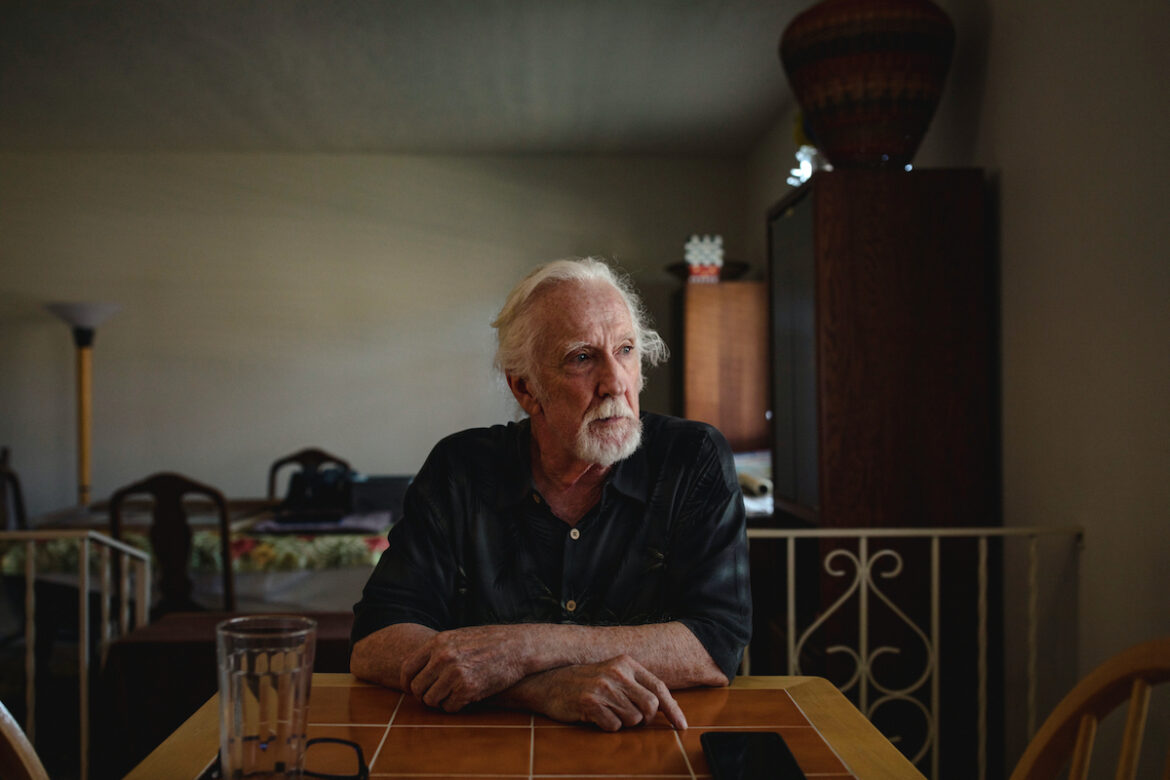
By 2013, Steve Harbin’s alcohol issue appeared to almost everybody.
As soon as a thriving salesperson in the building and construction market, he ‘d lost his task and medical insurance. Gone were the dream home he had actually created in Albuquerque’s foothills and much of the motorbikes he ‘d owned. The last one, a Kawasaki W650 with a gun exhaust, beinged in his garage in disrepair.
His marital relationship had actually been breaking down for several years and now the stepdaughters he ‘d assisted raise abhored him, the method Steve disliked his own papa who he ‘d testified never ever end up being.
He was draining pipes 2 bottles of Irish scotch a day. More of his social security check went to alcohol than anything else.
However the individual with whom Steve spoke most freely about his drinking and needs to have assisted him cut down was the last to see the issue: his physician. The clinician had actually understood Steve for years, however never ever identified his drinking condition nor referred him for treatment. He fasted to brush off his client’s dangerous habits, as Steve remembered it, material to leave the client to assist himself.
Steve’s predicament was plain however not unusual. According to the New Mexico Department of Health, over 73,000 homeowners who might gain from treatment to minimize their alcohol intake are not getting it, more than individuals addicted to all other compounds integrated.

State authorities, doctors, and clients provide different descriptions for this space. Dealing with alcoholism is hard: resolving it suggests altering long-lasting routines. Plus, New Mexico has too couple of psychiatrists, behavioral health service providers, and social employees, and just a handful of medical professionals concentrate on dependency medication. The state’s hardship worsens the obstacle.
However alcoholism likewise frequently goes unacknowledged. The most recent study information reveal that of New Mexicans who had a beverage in the previous month, more one in 4 satisfy requirements for an alcohol usage condition, amongst the greatest percentages in the nation.
And once again and once again, clinicians and even clients lay obligation on the individual with the dependency. “I strongly think that unless somebody wishes to make the modification them self,” Steve stated, “they’re not going to stop.
William Miller, a teacher emeritus at UNM and among the world’s primary professionals on the psychology of modification, respectfully disagrees. “Awaiting individuals to ‘strike bottom’ is a pernicious misconception,” he composed in an e-mail.
Dealing with issue drinkers in New Mexico almost 40 years back, Miller and associates established ‘inspirational speaking with’– a kind of therapy that assists clients alter their drinking routines by checking out and solving their own uncertainty– that is now used worldwide.
It’s dishonest for medical professionals to postpone treatment for clients with asthma, diabetes, or cardiovascular disease up until they are adequately inspired, and Miller stated alcohol conditions need to be no various. “Assisting individuals discover their own inspiration for modification is an essential and early part of our task, and there is strong science that it’s possible.”
Missed out on chances
Steve’s drinking was rooted in his laden relationship with his own dad, low self-confidence, and anxiety, however he was much better off than numerous New Mexicans in comparable straits. He was expertly effective.
His partner Angie was devoted to the soft-spoken guy who had actually charmed her and fallen for her women. Initially from the Midwest, she was raised to think if you strive enough, you will prosper. She took a look at her relationship with Steve that method.
” I’m an individual that does not surrender really quickly,” she stated. “You see it out till you see that you have absolutely nothing delegated offer.”
More than a years into their marital relationship, she ‘d pressed Steve to go into treatment, relocating with her sis up until he consented to enlist in a multi-week program at Presbyterian’s Kaseman Medical facility. However Steve believed the sessions were horrible. “It was more of a shaming procedure than it was anything favorable about it.”
He stopped drinking, Angie remembered, however, like clockwork, fell off the wagon every 6 weeks. “The issue was he never ever did the work so he never ever actually did comprehend what was going on,” she stated. “It was simply a white-knuckle flight.”
The health system might have done more to satisfy him where he was at.
Steve had actually been seeing the exact same medical care physician for over twenty years, a guy in personal practice around his age. When Steve lost his medical insurance, the physician maintained him as a client.
” He was actually among the most caring medical professionals I have actually ever understood.”
They frequently discussed Steve’s drinking and the damaging impacts of alcohol on psychological and physical health, Steve stated. However when Steve battled with incapacitating stress and anxiety about work, the physician recommended a benzodiazepine, a class of drug that can be addicting and hazardous to blend with alcohol. Steve ended up being depending on that, too.
” He would keep recommending them for me and he would simply state, ‘you’re not consuming excessive while you’re taking these.'”
Steve’s predicament wasn’t uncommon, current research study programs. Seventy percent of individuals with alcohol conditions report a physician asking about drinking in the in 2015. However just 12% state they were counseled to lower, and simply 5% state the physician used info about treatment. That easy technique– what is called Screening, Quick Intervention, and Recommendation to Treatment, or SBIRT for brief– works at lowering alcohol intake amongst problem drinkers, research studies reveal
For years, Steve’s physician missed out on the severity of his drinking issues, he stated, and never ever suggested anywhere to look for aid. “He informed me one time that ‘I do not actually believe you’re an alcoholic,’ which constantly made me feel odd– due to the fact that in the long-run, I was an alcoholic.”
That sort of thinking– of excellent and bad drinkers– can likewise be a blind area.
It’s interesting think medical professionals can arrange drinkers into those not able to manage their routine and those who can, Miller stated, however the science of dependency has actually moved far from that dichotomy. In 2013, the American Psychiatric Association got rid of categorical differences of alcohol ‘abuse’ and ‘reliance’, changing them with a spectrum from moderate to extreme condition This acknowledges that clients like Steve exist on a continuum and, any place they are along it, can gain from interventions suggested to minimize alcohol intake, even without always removing it.
And medical care medical professionals who recognize an alcohol condition frequently press clients towards professionals and inpatient care, in spite of proof they can assist right away.
A landmark trial discovered clients who were counseled by their medical professionals and recommended naltrexone, a medication utilized to deal with opiate conditions that has actually likewise been revealed to minimize numerous clients’ yearnings for alcohol, fared in addition to clients getting more extensive therapy from professionals. “That is among the huge misunderstandings I see in the field,” stated Dr. Snehal Bhatt, the chief of dependency psychiatry at UNM.
Bhatt stated recommendations are specifically ill-suited to New Mexico, where numerous treatment service providers do not have sufficient skilled personnel or are restricted by the capability of their centers and can’t quickly accommodate brand-new clients. “They end up shuttling backward and forward, simply lingering, and they’re getting progressively desperate,” he stated. “That’s aggravating, due to the fact that we can be doing something today.”
The mantra of Bhatt and others, who are attempting to make therapy offered to clients any place they look for care, is every door is the right door.


A rollercoaster flight
In his late 50s, Steve was consuming upon waking to numb hangovers and didn’t stop up until he lost consciousness. Years previously, Angie was identified with several sclerosis, and now tension triggered the illness to flare. Steve coped by consuming more.
He was at his finest on gos to with his grandkids, his youngest step-daughter Meredith Boles remembered, when she saw a twinkle of the individual who had actually assisted raise her. “At one point he was this beautiful guy, and I keep in mind bits and pieces of him,” she stated. “And he simply gradually became this thing.”
Meredith saw her stepfather’s habits as progressively delusional. He ‘d purchased a weapon and as soon as left it on the bed for her mommy to find it, she remembered. On several celebrations he called Meredith’s sis, informing her he was considering suicide, keeping her on the phone for hours as she talked him out of it.
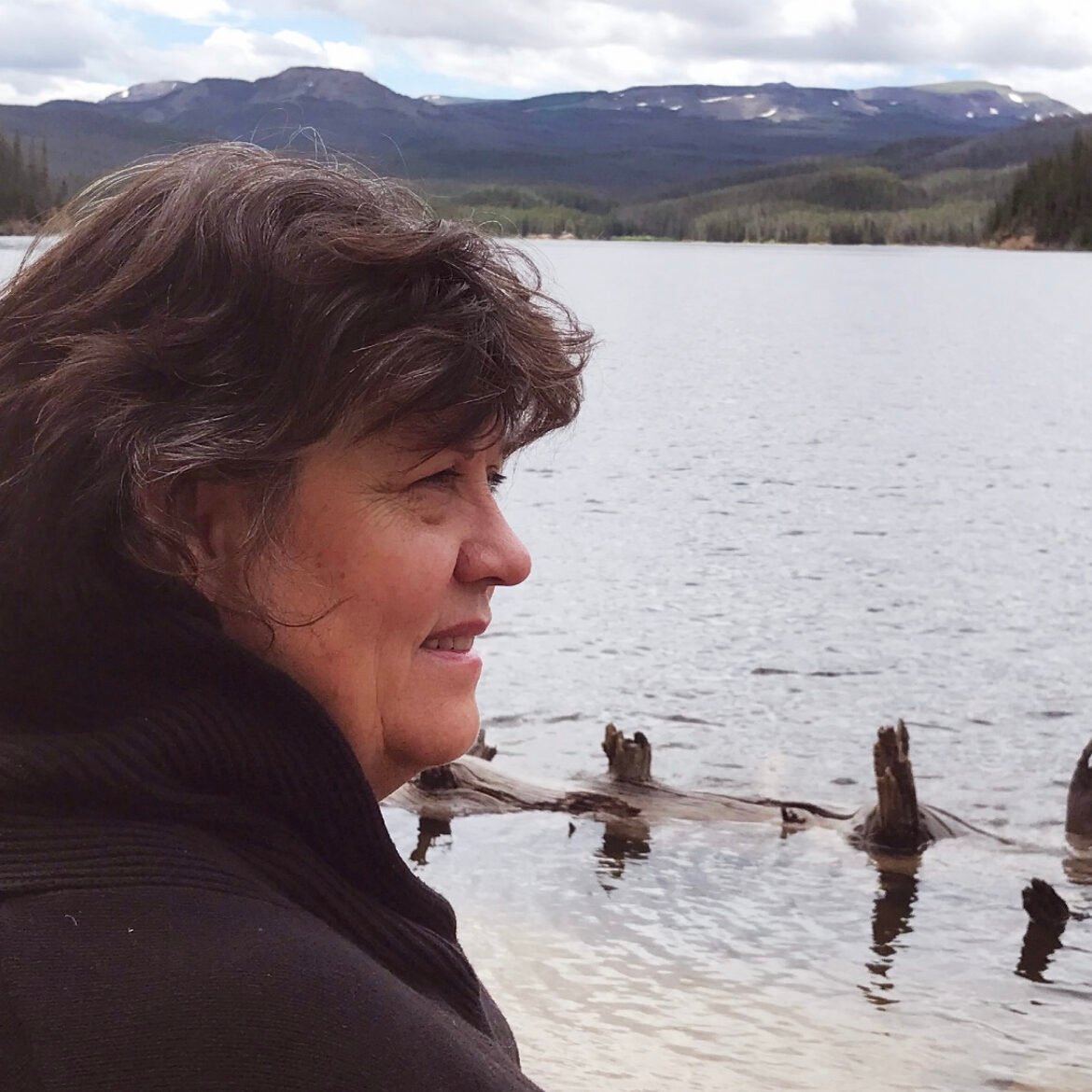
Meredith put some range in between her household and Steve, transferring to Colorado in 2010. “I didn’t understand how to assist him besides to set borders for us,” she stated. Angie followed, applying for divorce.
What lastly conserved Steve was a fortunate mishap. He discovered the variety of an obscure compound usage center that the psychology department of the University of New Mexico (UNM) lacks a small on-campus home, and left a message. Weeks later on when a college student called him back, Steve remembered, “I had problem attempting to determine who the heck it was.” However the center used cutting edge treatment and his absence of medical insurance was no challenge: they charged him one dollar per session.
His development took years– “a genuine rollercoaster flight,” he called it– however with the therapists he lastly started to unload the origin of his drinking and to deal with a hidden anxiety. The center ultimately referred him to UNM’s Dependency and Drug abuse Program (ASAP), where his treatment continued and clinicians recommended him naltrexone. Many research studies have actually discovered it helps inspired clients minimize their drinking, although the most practical, injectable variation can be pricey even for those with insurance coverage.
” It’s life-altering,” stated Steve. “I simply never ever think of drinking, which is unbelievable for me.”
Regardless of its efficiency, naltrexone is underused: across the country, simply 1.6% of individuals with alcohol conditions have actually gotten medication for them. And in New Mexico, of more than 100,000 individuals with any kind of compound usage condition, less than 4,000 individuals have a prescription, according to the Legal Financing Committee
Steve has actually been sober more than a year and a half, the longest duration in his adult life he has actually gone without a beverage.
His success is not an aberration: recognized early and dealt with according to finest practices, individuals with dependencies react much better to treatment and experience less regular reoccurrence of signs (in their case, regression into compound usage) than those handling hypertension or asthma, research studies reveal. “If you need to have a persistent health problem, dependency is not a bad one,” Miller stated. “The majority of people do get far much better throughout treatment.”
A lot of clients at ASAP are self-referred, and it amazed Steve the program wasn’t more extensively understood. “The medical neighborhood does not appear to be knowledgeable about the resources,” stated Steve. “A lot of medical individuals that remain in the UNM system [don’t know about it], which is actually insane.”
New Mexico’s medical neighborhood might do more to alter this. In 2004, with financing from the state health department and the Robert Wood Johnson Structure, the New Mexico Medical Society developed a handbook for the state’s doctors about screening and therapy clients on alcoholism However the company stopped dispersing it in 2010 when the grants went out and has actually refrained from doing additional alcohol education given that.
The Greater Albuquerque Medical Association has actually never ever used any curricula about therapy clients with alcohol conditions or recommending them medications, according to executive director Sylvia Lyon. UNM Medical facility is working to make screening for alcohol conditions and quick therapy interventions offered to every client who looks for medical care, the gold-standard for years, however that objective is still a couple of years away.
State Medicaid director Nicole Comeaux stated her workplace is thinking about modifications to motivate more service providers to screen, step in and describe treatment people battling with alcohol conditions. Almost half of New Mexico’s population is guaranteed by Medicaid– which covers individuals who are low-income or handicapped, to name a few– so the program wields outsize impact through the policies it sets for handled care service providers.
Considering that 2019, clinicians can bill for time invested carrying out SBIRT, which is more cost-efficient than other kinds of services for alcohol condition such as extensive outpatient treatment. However the state’s service providers just billed for 8,000 sessions in 2020, which the Legal Financing Committee determined to be 1% of the total Medicaid population. “Those numbers are much lower than I want to see,” Comeaux yielded.
The failure to counsel even a single client who requires it can have significant effects. Steve’s alcohol condition injured individuals around him: years after their divorce, Angie stated she still has trouble relying on individuals and will never ever remarry. “The focus is normally on the individual that is experiencing the dependency, however the causal sequence is so broad, to not just partners and moms and dads and siblings and siblings, however the next generation.”
Undoubtedly, Steve’s relationships with his step-daughters and his grandchildren appear beyond repair work. In Al-Anon, the support system for households of individuals battling with alcohol, they encourage to separate with love, however by the end, Meredith stated she felt overall indifference. “I simply do not see him as that individual that I did love. The individual that I did love … I can hold a various area for that individual.”


Today Steve’s life is steady and peaceful. He does not have numerous good friends and age is slowing him down. However he takes fulfillment from cleaning his front backyard and bring back an old outdoor camping trailer. He’s got a 20-pound pooch to look after, too.
And having actually cleaned up the carburetor of his Kawasaki bike and charged the battery, one or two times a month he will go on a flight. Years back, he liked looping north on NM-14 behind the Sandias to Pojoaque, dropping in Jemez Springs to see a pal prior to finishing the four-hour loop.
Now he mainly takes the bike to sessions at the center.
” I do not understand what it resembles for other individuals however when I’m riding a bike, I do not think about anything else,” he stated. “It’s type of a mindfulness workout. It cleans my mind tidy.”
Assist New Mexico In Depth much better comprehend alcohol’s function in the state by sharing your story.
Ted Alcorn is an author raised in New Mexico whose work has actually appeared in The New york city Times, The Atlantic, and The Washington Post Publication, to name a few publications. For New Mexico In Depth he’s examined how the state’s jails have actually disregarded an epidemic of liver disease C, how Albuquerque stood its branch of non-police emergency situation reaction, and how non-profit medical facilities scam neighborhood health. Follow him at @tedalcorn