
In 2015, when archeologists discovered what they thought to be 200 unmarked graves at an old-fashioned in Canada, it brought brand-new attention to among the most disgraceful chapters of that country’s history. Beginning in the 1880’s and for much of the 20th century, more than 150,000 children from numerous indigenous neighborhoods throughout Canada were by force drawn from their moms and dads by the federal government and sent out to what were called Residential Schools. Moneyed by the state and run by churches, they were developed to absorb and Christianize indigenous children by ripping them from their moms and dads, their culture, and their neighborhood. The children were frequently described as savages and prohibited from speaking their languages or practicing their customs. As we initially reported previously this year, lots of were physically and sexually mistreated, and countless children never ever made it house.
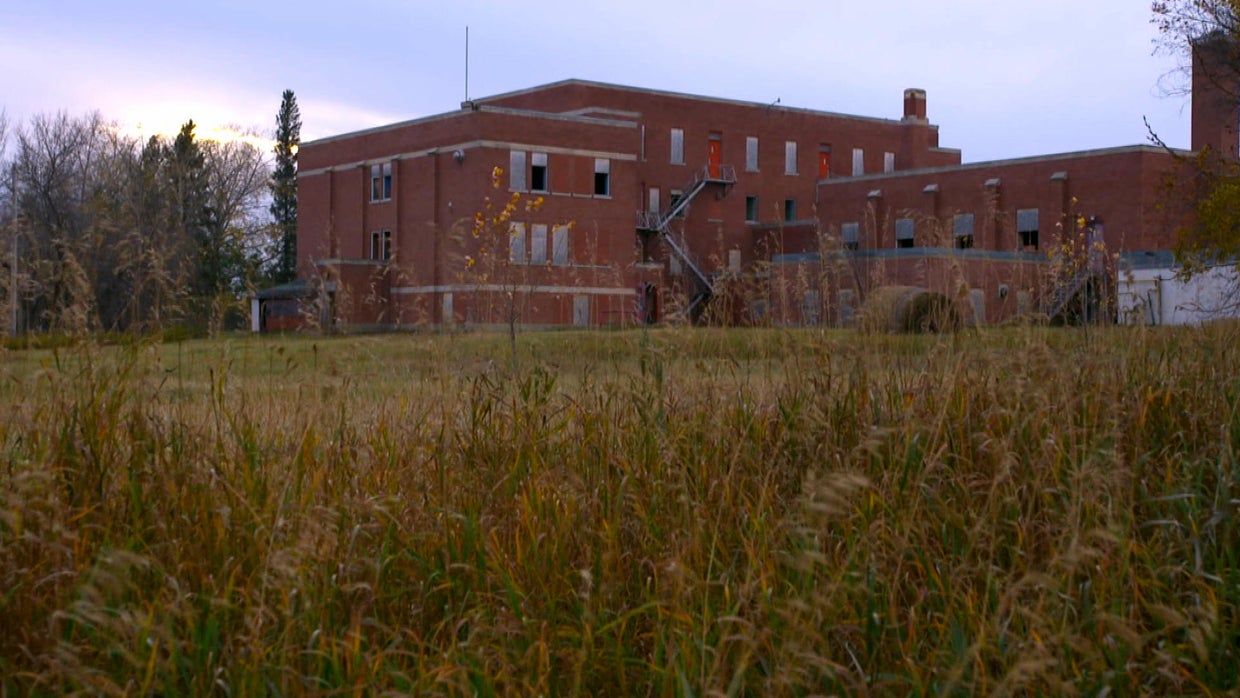
The last of Canada’s 139 residential schools for indigenous children closed in 1998. The majority of have actually been taken apart, however the Muskowekwan residential school in Saskatchewan still stands. Its windows boarded up, Its spaces gutted. A tip to a country that would rather forget. A 3- floor tombstone for generations of children who passed away here.
Leona Wolf: In some cases, I want it would be chosen all what occurred here.
Anderson Cooper: You want this had been taken apart?
Leona Wolf: Yeah. I might hear whatever in here, what was done. It sticks around.
Leona Wolf, who originates from the Muskowekwan reserve, was 5 years of ages when she states she was drawn from her house in 1960. School authorities and cops would frequently appear unannounced in indigenous neighborhoods and assemble children, some as young as 3. Moms and dads might be imprisoned if they declined to hand their children over. When kids got to their schools, their conventional long hair was slashed off. If they attempted to speak their language, they were frequently penalized.
Leona Wolf: They put me in a little dark space like that. And they ‘d shut the door and after that they ‘d remove the light. All I needed to check out was this much light, like I remained in prison.

She states the abuse lots of kids at Muskowekwan experienced the Catholic priests and nuns wasn’t simply physical.
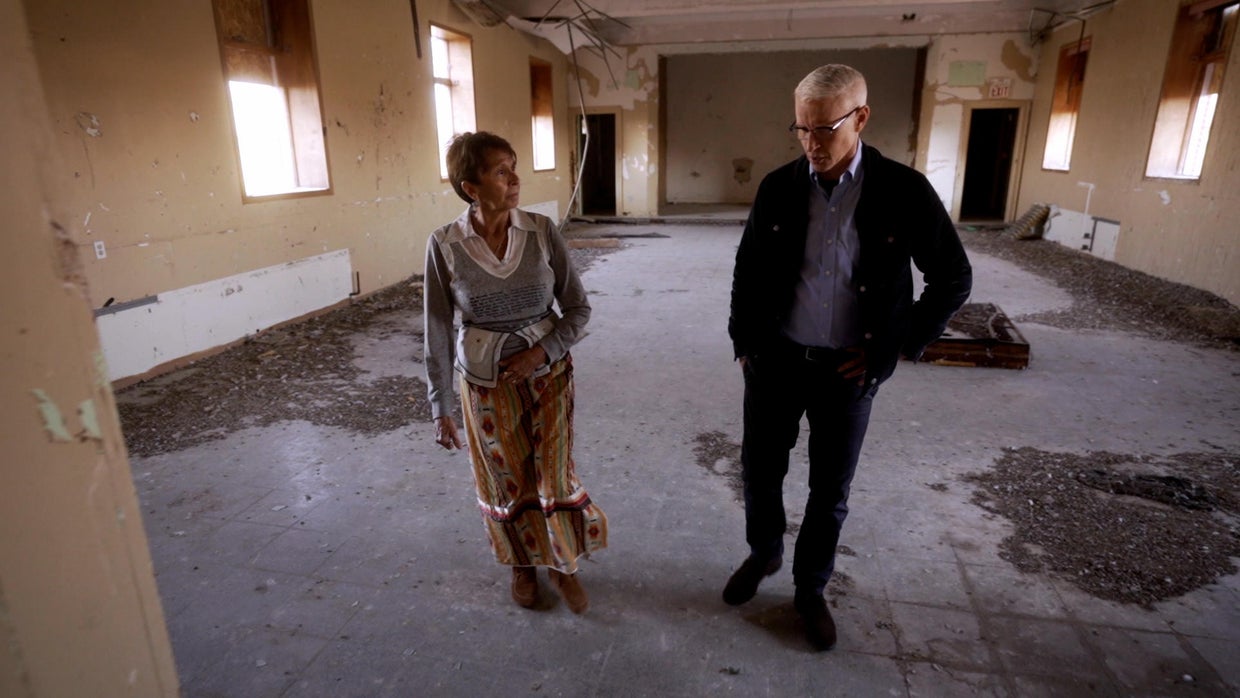
Leona Wolf: Daddy Joyal was fondling the ladies here.
Anderson Cooper: A priest, Daddy Joyal, was fondling ladies in this space?
Leona Wolf: Yeah. This utilized to be ill bay. They utilized to have a bed here
Anderson Cooper: And he would take ladies into the bed?
Leona Wolf: Yeah, my cousin.
Anderson Cooper: He took your cousin in here? How old was she?
Leona Wolf: She was just 8.
Leona Wolf: I matured an extremely, extremely imply female since of all what occurred to me.
Anderson Cooper: You discovered that here, you believe?
Leona Wolf: Yeah
She is not the only one. More than 150,000 children were sent out to residential schools, which Canada’s very first prime minister supported to, in his words, “sever children from the people” and “civilize” them. For much of the 20th century, the Canadian federal government supported that objective.
The concept for the schools was available in part from the United States. In 1879 the Carlisle Indian Industrial School opened in Pennsylvania, where this picture was taken of Native American children when they initially showed up. This is them 4 months later on. The school’s slogan was “eliminate the Indian, conserve the male.”
Chief Wilton Littlechild: As A Result, ours was, “eliminate the Indian in the kid.”
Anderson Cooper: “Eliminate the Indian in the kid.”
Chief Wilton Littlechild: Mhhm.
Anderson Cooper: That was the directing concept here in Canada.
Chief Wilton Littlechild: Yeah.

Chief Wilton Littlechild, who is Cree, was 6 years of ages when he was required to this residential school in Alberta. Then, he states, he was offered a brand-new name.
Chief Wilton Littlechild: My name was number 65 for all those years.
Anderson Cooper: Simply a number.
Chief Wilton Littlechild: Simply a number, yeah. “Sixty- 5, select that up dumb.” Or, “65, why ‘d you do that, moron?”
Anderson Cooper: What does that seem like at 6 years of ages to be called a number?
Chief Wilton Littlechild: Well, I believe that’s where the injury starts. Not simply the physical abuse, mental abuse, spiritual abuse. And worst of all, sexual assault.
Anderson Cooper: You were sexually mistreated.
Chief Wilton Littlechild: Yes. I believe that’s where my anger started as a young kid.
Chief Littlechild states he had the ability to take a few of that anger out on the school’s hockey rink. He won a scholarship to university and finished, ultimately going on to a prominent profession in law. However his story is the exception.
Chief Wilton Littlechild: They didn’t eliminate my spirit. So, I’m still Cree. I’m still who I am. I’m not 65. My name is Mahigan Pimoteyw. So, they didn’t eliminate my spirit.
In 2008, after countless school survivors submitted suits, the Canadian federal government officially excused its policies. It likewise established a $1.9 billion settlement fund and developed a Reality and Reconciliation Commission that Chief Littlechild assisted lead. For 6 years the commission heard testament from survivors throughout the nation.
Helen Quewezance: And she put me undersea, slapping me and striking me, slapping me and striking me, and punching me and punching me and holding me under water, pulling my hair, and I believed, “God she’s going to eliminate me, I’m going to pass away very first day of school.”
Ted Quewezance: We as little young boys and little ladies, we lost our innocence.
In 2015 the Commission concluded what occurred was “cultural genocide.” It recognized more than 3,000 children who passed away from illness due to overcrowding, poor nutrition and bad sanitation, or passed away after being mistreated or attempting to escape. A federal government research study in 1909 discovered the death rate in some schools was as high as 20 times the nationwide average. Many schools had their own cemeteries, and often when children passed away, their moms and dads were never ever notified.
Chief Wilton Littlechild: It’s actually terrible for those households who do not understand what occurred to their kid or relative in the schools.
Anderson Cooper: Why weren’t kids who passed away at the schools, why weren’t they sent out house?
Chief Wilton Littlechild: To conserve cash
In 2015, archeologists discovered what they stated might be 200 unmarked graves at this previous school in Kamloops, British Columbia. Weeks later on, an additional 751 unmarked tombs were discovered throughout from the previous Marieval residential school on the Cowessess reserve in Saskatchewan. There was when a Catholic cemetery here, however the headstones were bulldozed in the 1960s by a priest after a conflict with a previous chief.
A little group of scientists has actually been attempting to find the names of those children buried here, however for years the federal government and the church had actually hesitated to share their records. Chief Cadmus Delorme is attempting to get the answer.
Anderson Cooper: Do you understand that they’re all children?
Chief Cadmus Delorme: We can’t confirm just how much are children, however based upon the research study we’re doing, a great deal of them were children that were required to go to the Marieval Residential School and passed away in the Marieval residential school.

Chief Delorme states he intends to offer the unknown children a self-respect in death that they never ever got in life.
Chief Cadmus Delorme: I wan na make certain that Canada understands the fact, ’cause you can’t transfer to reconciliation till you accept the fact.
The discoveries of the tombs opened deep injuries. More than a lots churches have actually been vandalized or damaged, and thousands have actually marched requiring the Pope say sorry and the churches open archives to assist determine any missingchildren Indigenous neighborhoods throughout the nation have actually started performing their own searches utilizing ground- permeating radar.
Kisha Supernant: We have actually laid out a variety of grids throughout this landscape.
Archeologists Kisha Supernant and Terry Clark state 35 unmarked tombs have actually been found at the Muskowekwan school.
Terry Clark: There is something going on there that is not natural.
When we existed this previous October, they discovered what seemed another. According to survivor accounts, children often needed to dig their schoolmates’ tombs.
Anderson Cooper: The priests or the school authorities would require the kids to dig other children’s tombs?
Kisha Supernant: Yep, yep. Can you think of being, like, 10 or 11 and digging a tomb for your schoolmate, what that must have resembled?
Kisha Supernant states the look for unmarked tombs will continue for many years.

Kisha Supernant: This is extremely psychological work. It’s extremely destructive work. It’s heartbreaking for everybody who’s included.
Anderson Cooper: You feel that too?
Kisha Supernant: I do. Our neighborhoods still feel the effects of these organizations in our daily lives. We’re method over- represented in kid well-being and adoptions and foster care. We’re method over- represented in the jails. You can draw a direct line with that to these locations and the discomfort of that, that has actually been handed down from generation to generation.
Ed Bitternose: I began school here in 1958.
Ed Bitternose, who is Cree, comprehends that discomfort. He was 8 years of ages when he was required to the Muskowekwan school. His moms and dads lived within sight of the school and when he attempted to escape, he states the priests required him to kneel on a broom manage for 3 days.
Ed Bitternose: That’s where my home was. I would sit here and question why I could not be house.
Anderson Cooper: That should have been ravaging.
Ed Bitternose: Yeah.
It wasn’t just grownups he feared. Some trainees, themselves victims of abuse, victimized otherchildren
Anderson Cooper: Were you abused here?
Ed Bitternose: Yeah. Mhhm. In fact, in this space here, by among the, among the, among the young boys.
Anderson Cooper: In this extremely space?
Ed Bitternose: This extremely location here.
Later on, he states, he was likewise sexually molested by a nun. When he left school, he was rudderless and violent and relied on alcohol. When he got wed, he states, he didn’t understand how to reveal love.
Anderson Cooper: You didn’t understand what love was?
Ed Bitternose: No. No. Since I never ever felt it here. I didn’t begin stating I liked her till we were wed about 40 years, and after that I was extremely mindful how I stated it.
Anderson Cooper: You didn’t state to your other half for 40 years that you liked her?
Ed Bitternose: Mhhm. Yeah.

He states his life altered when he started re- finding his Cree culture. Raising buffalo and sharing conventional understanding with children brought recovery, and lastly, an understanding of the word love.
Anderson Cooper: You can state that now?
Ed Bitternose: I can state that now. And, and it feels excellent. And I still joke with my other half about that. “Do not state that too loud, you understand.”
Anderson Cooper: So, you can state it, you simply do not wish to state it too loud?
Ed Bitternose: Yes, uh- huh. Yeah.
Anderson Cooper: Okay. You understand what, it’s much better than absolutely nothing.
Ed Bitternose: Yes, that’s what she states.
When It Comes To Leona Wolf, her life and the lives of her children and grandchildren have actually been pestered by violence and drug abuse, intergenerational injury, she states, that started the day her own mom was sent out to school at Muskowekwan.
Anderson Cooper: Did you see the effect of this put on your mama?
Leona Wolf: Yeah. Yeah.
Anderson Cooper: How?
Leona Wolf: Yeah, by consuming a lot, being mean to me. And it affect us, me and my bro, and my brother or sisters.
Anderson Cooper: What was done to her, she handed down to you. And what was done to you and others here …
Leona Wolf: Was handed down to mychildren This is why often I enter into my rage of anger, and I weep, since everything, it was all done to us, everyone. However it’s gon na stop now, you understand? It is.
Anderson Cooper: You think that?
Leona Wolf: I’m gon na, I’m breaking the cycle with my terrific- grandchildren.
Leona Wolf: Hail Mary, filled with grace.
Leona Wolf has actually gone back to her customs also. Strolling the halls of Muskowekwan, she started to sing Hail Mary, a prayer she was required to find out here long earlier.
Now she sings it her own method.
Anderson Cooper: That’s not how you sang it here when you remained in school, however, was it?
Leona Wolf: Nope.
Anderson Cooper: You made peace with the Virgin Mary by singing that tune?
Leona Wolf: Yeah, and I made peace with myself.
Last April at the Vatican, Pope Francis asked forgiveness to Canada’s Indigenous individuals for the “awful” abuses they suffered in Catholic- runresidential schools He’ll take a trip to Canada next month to make the apology face to face.
Produced by Michael H. Gavshon and Nadim Roberts. Broadcast partner, Annabelle Hanflig. Modified by Stephanie Palewski Brumbach.
