
EL PASO, Texas– Guys lined up outside the Corner of Hope, a homeless resource center, considering totally free materials on plastic racks inside a white van.
Some desired bags with toiletries or prophylactics, however others took sets that help them securely utilize drugs or naloxone, an opioid overdose turnaround medication.
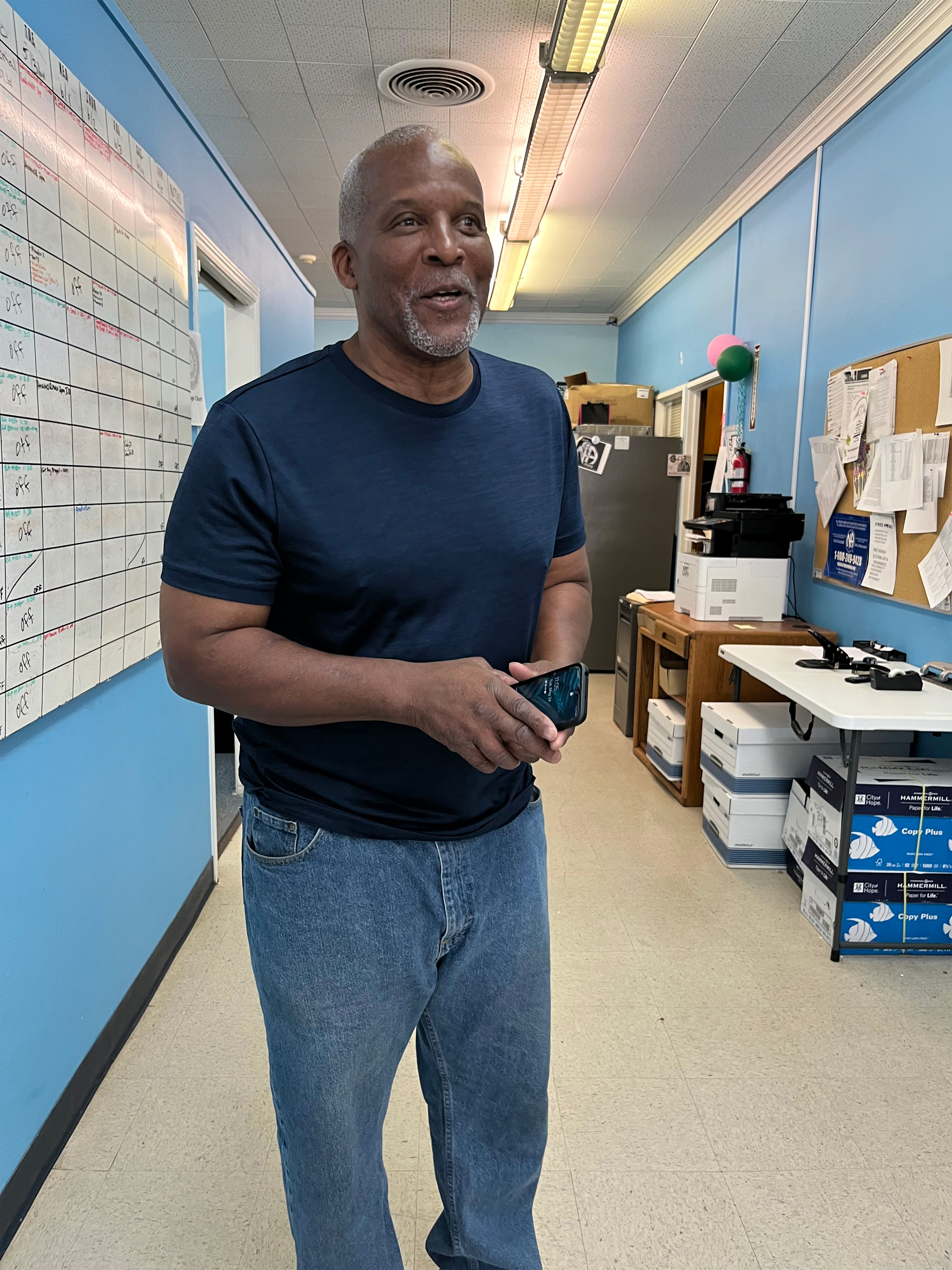
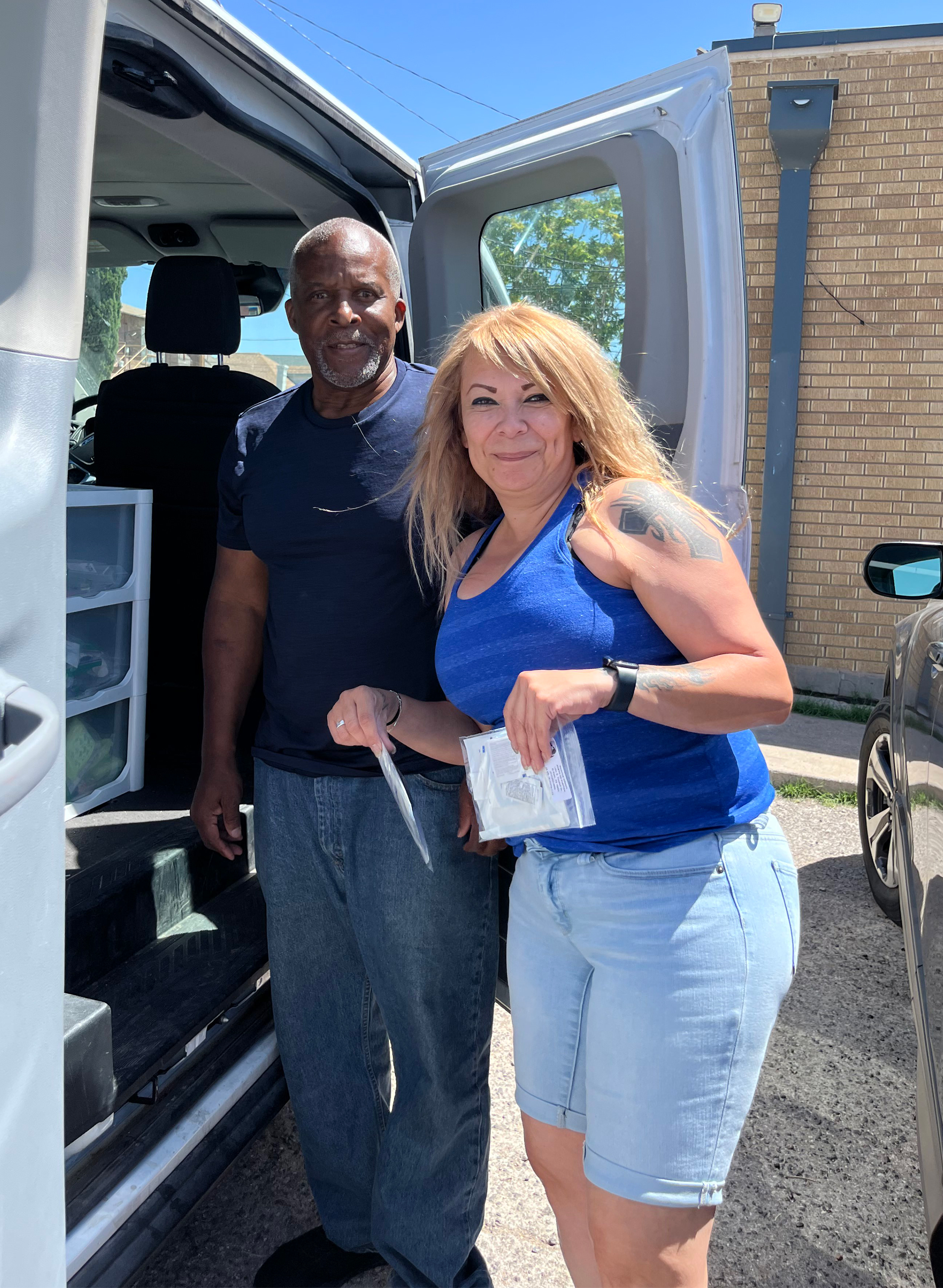
Gilbert Shepherd, an outreach employee for Punto de Partida, a not-for-profit that serves individuals who abuse drugs, carefully questioned those who took the drug security sets. A male using sunglasses and a black Tee shirts discussed that recently he took a tablet he purchased for $1.50 and, within minutes, he lost consciousness for hours. A male in a plaid t-shirt and khaki trousers explained seeing somebody overdose after taking a blue tablet a month in the past.
Those 2 overdoses would be included to a brand-new Texas database called Texans Connecting Overdose Avoidance Efforts, which intends to enhance drug overdose tracking throughout the country’s second-largest state.
The University of Texas task, called TxCOPE, is one effort to fix an issue exasperating authorities nationwide who are attempting to lower the record variety of drug deaths: getting an immediate, precise image of both nonfatal and deadly drug overdoses. Neighborhood groups are now utilizing TxCOPE’s data control panels and heat maps to see where overdoses are surging and after that target those locations with avoidance efforts such as naloxone training and materials, stated Christopher Bailey, task organizer at Job Vida, an university hospital in El Paso.
It is among the couple of jobs in the U.S. pooling crowdsourced overdose data from damage decrease groups in a methodical method, according to Leo Beletsky, a public health law professional at Northeastern University. Such jobs make up for the absence of a precise image of the decades-long overdose crisis. “It’s outrageous,” Beletsky stated.
More than 107,000 Americans passed away of drug overdoses in 2021, according to the Centers for Illness Control and Avoidance However there is no nationwide count of the number of individuals endure drug overdoses. The CDC does not even have a requirement approach that mentions can utilize to count nonfatal overdoses. It aggregates overdose data from emergency clinic sees based on scientific and billing codes from taking part states, however that omits individuals who do not engage with the medical system, stated Bradley Stein, director of the Rand Opioid Policy Center. It is a “substantial blind area,” Stein stated.
Plus, deadly overdose data is typically released weeks or months later on, as soon as a main medical inspector’s report or toxicology outcomes reveal what compounds triggered the deaths. “We’re searching in the rearview mirror with opioids,” Stein stated.
Other jobs that count nonfatal overdoses, such as ODMAP, rely on reports from police or very first responders. However numerous drug users will not call emergency situation services or report overdoses for worry of arrest, deportation, or other repercussions such as the loss of their kids or real estate due to substance abuse, stated Traci Green, a teacher and the director of the Opioid Policy Research Study Collaborative at Brandeis University.
” Put simply, existing nationwide data systems have actually not stayed up to date with the scale of the overdose epidemic,” composed Dr. Rahul Gupta, director of the Workplace of National Drug Control Policy, in a require action released June 30 in JAMA He included that constructing a much better data system is necessary which his company is assembling with other federal firms to enhance the tracking of nonfatal overdose data.
Nationally, Green approximated, about 50% of nonfatal overdoses go unreported, with a greater undercount in locations with more stringent police and amongst neighborhoods of color. The missing part of the image “is a really varied one,” she stated.
In Texas, up to 70% of overdoses, mainly nonfatal, go unreported, approximated Kasey Claborn, lead scientist on the TxCOPE task and an assistant teacher at UT’s Dell Medical School and Steve Hicks School of Social Work.
Formally, about 5,000 Texans passed away of a drug overdose in 2021. Claborn thinks that is an undercount, too, due to the fact that the state has medical inspectors’ workplaces in just 15 of its 254 counties. The majority of counties have justices of the peace who do not constantly demand costly toxicology tests to figure out the cause of death. The state tape-recorded almost 4,000 opioid-related calls to the Texas Toxin Control Network in 2015 and almost 8,000 opioid-related emergency clinic sees in 2020. Claborn is evaluating how the data TxCOPE gathers compares to those main data.
Drug specialists are annoyed the U.S. does not deal with the overdose epidemic with the seriousness it provides for covid-19. Drug deaths rose throughout the pandemic as prohibited fentanyl, which is 50 to 100 times more powerful than morphine, flooded the country’s street drug supply and individuals were cut off from drug abuse assistance. However while public health authorities based pandemic constraints on regional covid caseloads and death counts, specialists and outreach employees have actually done not have real-time data that would permit them to respond with interventions that might conserve drug users’ lives.
” How is that assisting in a public health emergency situation?” stated Daniel Sledge, a paramedic screening TxCOPE in Williamson County, simply north of Austin.
That info might help health employees determine which locations to blanket with naloxone or whether they require to inform individuals about a batch of drugs laced with deadly fentanyl.
TxCOPE, moneyed by the state’s opioid grant and the federal Drug abuse and Mental Health Solutions Administration, began in El Paso in June 2021 and after that broadened to Austin, San Antonio, and later on Williamson County. A main launch is prepared for Sept. 1, with a rollout to the remainder of the state in phases.
Prior to the group began, outreach was more haphazard. “It was catch as catch can,” stated Bailey, with Job Vida. Like numerous damage decrease groups, they would informally track overdoses, which typically happened amongst a travelling population. However they didn’t have a method to swimming pool that info with other city groups or produce maps to drive outreach. TxCOPE has actually assisted the group discover pockets of at-risk individuals so they can offer them with overdose avoidance, peer assistance, or treatment recommendations. Now “you are able to truly house in on those locations with laserlike focus,” he stated.
Punto de Partida outreach employee Paulina Hijar, for instance, stated she consistently satisfies individuals who injected their buddies with hazardous and inefficient homemade overdose solutions– either milk or a mix of water and salt– or got naloxone and never ever called authorities. Since outreach employees have actually constructed rely on their neighborhoods, they state, they can collect info about overdoses, consisting of when and where they happened, that would typically be left out from main data.
Personal privacy is an essential function of the TxCOPE task– individuals require to be able to share overdose info without worry of repercussions, Claborn stated. Texas passed a law in 2021 meant to guard from arrest individuals who call emergency situation services throughout an overdose, however it’s directly customized Individuals who have a felony drug conviction, for instance, do not certify. And somebody is safeguarded from arrest just as soon as. TxCOPE has a federal certificate of privacy that safeguards it from court orders, and Claborn does not share raw data with the state.
Claborn desires to utilize the task, which is being revamped this summertime prior to the launch, to bring more federal dollars to the state. “We have actually had problem showing there is a real issue in Texas, due to the fact that it’s been concealed,” she stated.
She has actually been working on a function that would permit anybody in the neighborhood to report overdoses, an effort to enhance counts in parts of the state without damage decrease groups. Ultimately, Claborn desires to inspect the crowdsourced data versus toxicology reports.
In the meantime, however, the task relies on anecdotal proof from drug users and others in the neighborhood who report restoring somebody with naloxone or seeing somebody pass out or suffer other results of taking excessive of a drug.
On a current afternoon, Shepherd and Hijar acknowledged a male in El Paso’s Houston Park. He informed them about a female who had actually passed away alone in her home about a week and a half previously after taking a mix of drugs. He likewise discussed a man he was able to restore with naloxone about 2 months previously. Information were very little.
Scientists and damage decrease groups state this ambiguous data is much better than what they have actually had in the past. Despite the fact that the task’s anecdotal data isn’t completely vetted, the action towards timeliness is excellent, Stein stated. “We have actually got absolutely nothing else today,” he stated.